Water-Filled Barriers
Plastic barrier wall shipped empty and filled on site — a distinct class of device.
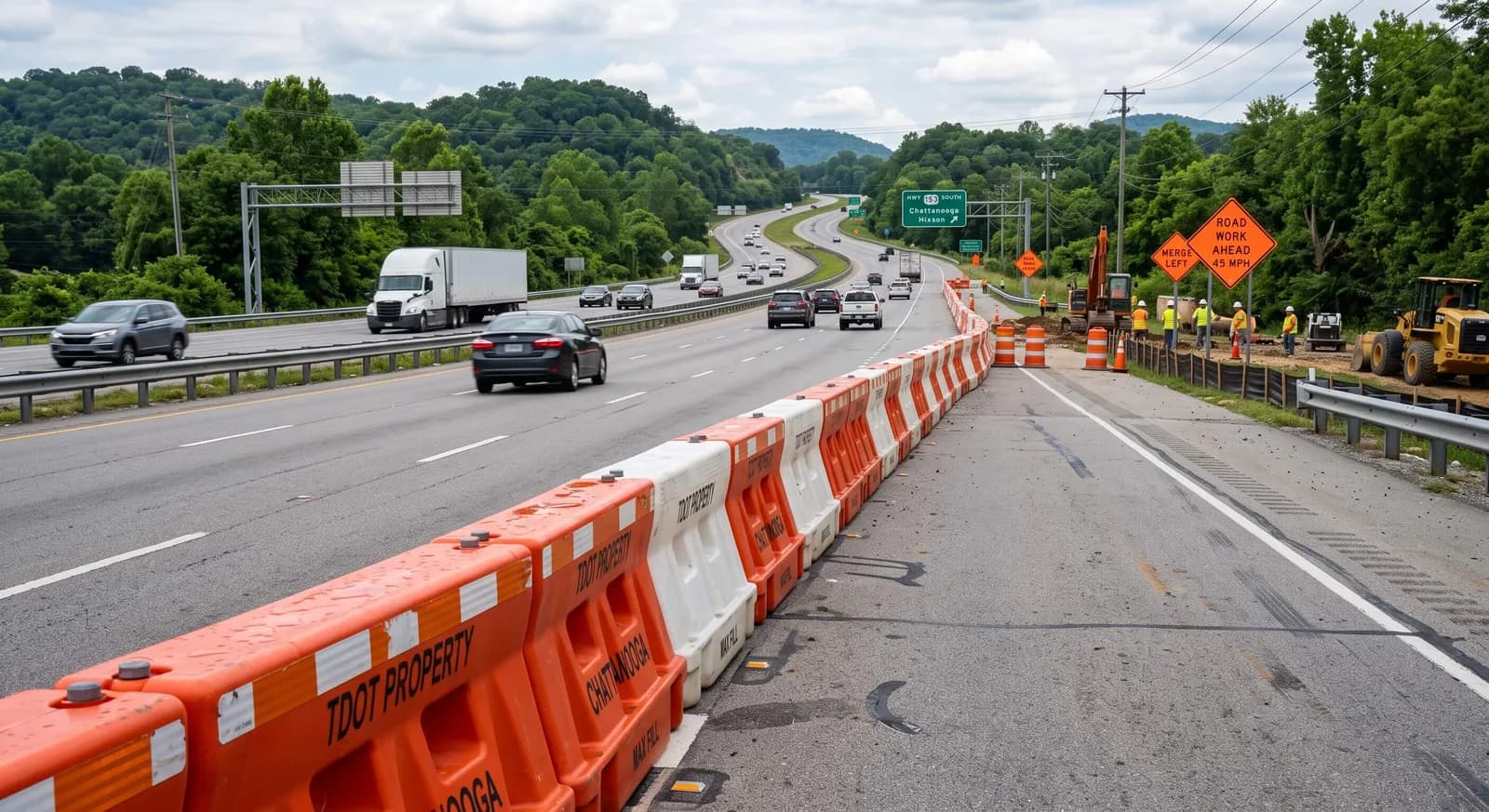
A water-filled barrier is its own class of device, and the distinction matters more than the name suggests. Empty, it is a light plastic shell one person can carry and a truck can haul by the dozen. Filled, it becomes a ballasted wall with the mass to hold a line. The filling is not a finishing touch — it is the entire mechanism, and it is the step crews skip most often.
That combination is why they have displaced so much concrete on short and medium-duration work: the weight arrives from a hydrant or a tank rather than on a lowboy, the run can be reconfigured in an afternoon, and at the end of the job the sections drain and stack.
A-1 Barricades supplies water-filled barrier for outright purchase and for rent by the job, delivered across Chattanooga and the surrounding tri-state area on our own trucks.
What's in this category
- Interlocking barrier wall
- Sections that pin or key together into a continuous run with no gaps — the standard configuration for lane separation, site perimeters and long event boundaries.
- Jersey-profile water barrier
- The sloped-face shape drivers recognise from concrete barrier, moulded in polyethylene. Reads as a barrier at distance, which is half of what a barrier does.
- Low-profile and event barrier
- Shorter sections for footpaths, queue lines, parking control, festival perimeters and anywhere a full-height wall would block sightlines that matter.
- Longitudinal channelizing devices (LCDs)
- MUTCD Part 6 devices used to channelize traffic and to protect pedestrian routes. Continuous, detectable and interlocking — a different job from a crash-tested barrier, and specified differently.
- End sections and transitions
- Tapered and terminal units that close the end of a run rather than leaving a blunt face pointed at traffic.
- Caps, plugs and fittings
- Fill caps, drain plugs and connecting hardware — the parts that go missing and strand a run half-filled.
How water-filled barriers help keep your jobsite safe
Water-filled barriers are useful for separating vehicle traffic and pedestrians from roadway construction work zones because they provide a strong, visible boundary between people and construction activities. When properly installed and maintained, these barriers help prevent pedestrians from accidentally entering areas containing equipment, vehicles, open excavations, or other hazards. Their bright appearance can also make the limits of a work zone easier to recognize, particularly in busy areas. Because they are filled with water on site, they are relatively lightweight to transport and position when empty. Water-filled barriers can also be connected to create a continuous protective system, helping guide pedestrians safely along designated walkways while keeping them separated from active construction.
Getting it right
Unfilled, it is a traffic cone with delusions of grandeur
An empty section weighs almost nothing. It will slide on impact, walk in wind, and give a crew a sense of protection that the device is not delivering. Every water-filled barrier in a live run should be filled to the manufacturer's line before traffic is released past it, and topped up over long deployments as sections seep and evaporate.
Know whether the plan wants a barrier or a channelizing device
This is the expensive mistake. Some water-filled products are crash-tested to a MASH test level and function as redirective barrier; many are longitudinal channelizing devices, which guide traffic and protect pedestrians but are not positive protection. If the traffic-control plan calls for positive protection, only a crash-tested unit at the specified test level satisfies it — an LCD in the same shape and colour does not. Read the plan, then match the product to it.
They are the right answer on a pedestrian route
A closed sidewalk needs a route a person who is blind can follow. Cones and tape fail that outright; a continuous run of water-filled barrier gives a solid, detectable edge at cane height with no gaps to wander through. Where the temporary route has to stay accessible, this is usually the cheapest device that actually complies.
Where we work
A-1 Barricades operates from 1415 Stuart Street in Chattanooga and has supplied traffic-control equipment across the Southeast since 1977.
20Communities across 3 states
Southeast Tennessee
- Chattanooga
- East Ridge
- Red Bank
- Soddy-Daisy
- Signal Mountain
- Hixson
- Ooltewah
- Collegedale
- Cleveland
- Dayton
- Jasper
Northwest Georgia
- Fort Oglethorpe
- Ringgold
- Dalton
- LaFayette
- Chickamauga
- Trenton
Northeast Alabama
- Bridgeport
- Stevenson
- Scottsboro
Water-Filled Barriers questions
What is a water-filled barrier?
A hollow polyethylene barrier section that is transported empty and filled with water on site to give it weight. Sections interlock into a continuous run. The empty weight makes them fast to place and reconfigure; the filled weight is what lets them hold a line, separate opposing traffic, or define a perimeter.
Are water-filled barriers crash tested?
Some models are, to AASHTO MASH test levels, and function as redirective barrier. Many others are longitudinal channelizing devices under MUTCD Part 6 — they channelize traffic and protect pedestrian routes but are not rated to redirect an errant vehicle. The two look similar and are specified very differently, so the traffic-control plan and the agency with jurisdiction decide which your job requires. Tell us what the plan calls for and we will match it.
Why use water-filled barriers instead of concrete?
Transport and reconfiguration. A truck can carry a great many empty plastic sections where it could carry only a few concrete ones, they can be placed without a crane, and a run can be moved as the work moves. Concrete still wins where a job needs a permanent, high-containment barrier for a long duration. For short and medium-duration work, and for anything that has to change shape as it goes, water-filled is usually the practical choice.
What happens to water-filled barriers in freezing weather?
Water expands when it freezes and can split a section. Before a hard freeze, either drain the barrier or use a freeze-point depressant the governing agency permits. Draining costs you the ballast, so on winter work the freeze plan has to be part of the traffic-control plan rather than an afterthought.
Can I rent water-filled barriers in Chattanooga?
Yes — water-filled barrier is rentable by the job for closures, projects and events, and we deliver and pick up on our own trucks. Call (423) 265-3054 with your dates, the length of run you need and what the plan specifies.
Need gear on site?
Call for a quote, to reserve rentals, or to check stock. The people who answer the phone know the equipment.